Albania
 Argentina
 Australia
 Austria
 Belgium
 Bosnia and Herzegovina
 Brazil
 Bulgaria
 Canada
 Chile
 Colombia
 Croatia
 Czech Republic
 Denmark
 Estonia
 Finland
 France
 Germany
 Greece
 Hungary
 Ireland
 Italy
 Latvia
 Lithuania
 Luxembourg
 Mexico
 Moldova
 Montenegro
 Netherlands
 New Zealand
 North Macedonia
 Norway
 Philippines
 Poland
 Portugal
 Romania
 Serbia
 Slovakia
 Slovenia
 South Africa
 Spain
 Sweden
 Switzerland
 Turkey
 Ukraine
 United Kingdom
 United States of America



Soprano Recorders
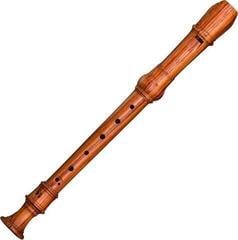
The soprano recorder in C is the most common first instrument at school, but models differ in fingering, material and tuning accuracy. For a child, it is important that you can cover the holes securely and that the recorder responds without you blowing hard. Your teacher should confirm German or Baroque fingering before purchase.
A school instrument must be predictable
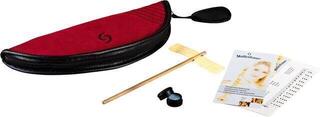
A multi-piece plastic body is easy to clean and allows you to rotate the bottom section to suit your little finger. A case and cleaning rod are more practical than a decorative colour. With an inexpensive model, check that the joints are straight and that the basic scale is in tune.
Do not confuse Baroque and German systems
The difference becomes apparent with certain notes, especially F. If you practise using a tutor book for a different system, you will develop incorrect habits. The marking is usually on the body or in the model name; if you are unsure, check it with your teacher.
Wood belongs in more patient hands
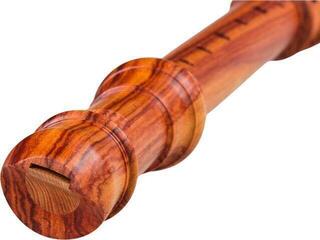
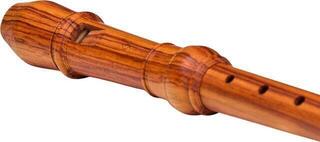
You must break in a wooden soprano recorder over shorter sessions and dry it after each time you play. Plastic copes better with regular school use. For a lower register and ensemble playing, you can later move on to an alto recorder; you can find the whole family among recorders.
Your breath guides the tone, not the volume
Blowing hard raises the pitch and causes squeaking. Start with a long, quiet note and soft tonguing. After practising, take the sections apart, remove condensation and let them dry outside the closed case.
A=440 or 442 tuning must suit the setting
As a school player, you will often not deal with the difference yourself, but in an ensemble the instruments must be in tune with one another. Fine-tune the recorder's length by pulling the headjoint out slightly, rather than changing the position of the sections for each note. Large deviations in intonation may be related to your breath or the quality of the instrument.
Confirm the fingering, choose a body whose holes the child can comfortably cover with their fingers, and add a simple drying accessory to the recorder.