Albania
 Argentina
 Australia
 Austria
 Belgium
 Bosnia and Herzegovina
 Brazil
 Bulgaria
 Canada
 Chile
 Colombia
 Croatia
 Czech Republic
 Denmark
 Estonia
 Finland
 France
 Germany
 Greece
 Hungary
 Ireland
 Italy
 Latvia
 Lithuania
 Luxembourg
 Mexico
 Moldova
 Montenegro
 Netherlands
 New Zealand
 North Macedonia
 Norway
 Philippines
 Poland
 Portugal
 Romania
 Serbia
 Slovakia
 Slovenia
 South Africa
 Spain
 Sweden
 Switzerland
 Turkey
 Ukraine
 United Kingdom
 United States of America



Powered Mixing Desks
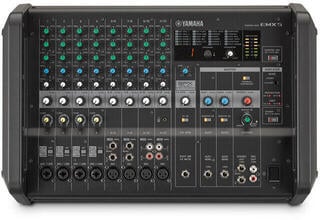
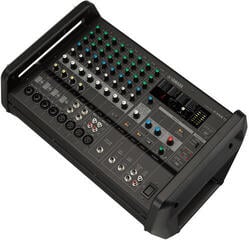
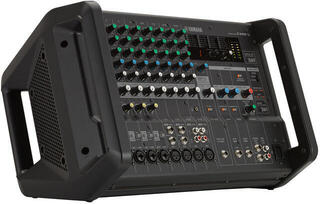
A powered mixer combines a mixing console and power amplifier in one device, allowing it to drive suitable passive speakers without a separate power amplifier. This solution can simplify a smaller fixed or portable system, but only if the outputs, impedance and speaker wiring method are mutually compatible. When choosing one, consider the number of inputs, monitor paths, built-in processing and the specifications of the amplifier section for the intended load. Do not confuse it with a conventional mixing console, whose line output cannot power a passive speaker.
When a powered mixer makes sense
A single enclosure reduces the number of separate devices and can speed up setup in a rehearsal room, smaller hall or mobile spoken-word event. At the same time, it combines two important parts of the system: if you later need to change the amplification section or the mixer independently, a separate solution offers more options. Having fewer units is therefore not the only advantage to consider. Weight matters for regular transport, while servicing and the possibility of future expansion are more important in a permanent rehearsal room.
| Solution | Advantage in the system | Limitation to check |
|---|---|---|
| Powered mixer + passive speakers | Fewer separate devices and direct, unified control | Load compatibility, available powered outputs and a shared point of service |
| Mixer + power amplifier | Each part can be selected and replaced independently | More connections, more space and separate gain adjustment |
| Mixer + active speakers | The amplifiers are assigned to the individual speakers | Power must be supplied to every active speaker |
The speakers and amplifier section must form a system
Powered outputs must only be connected to speaker inputs designed for an amplified signal. Do not connect them to the line input of an active speaker, processor or recording device. With passive speakers, check the nominal impedance, the method used to connect multiple speakers and the permitted load for each output according to the powered mixer's manual. An incorrect combination can overload the amplifier or speakers.
Read the power rating together with its conditions
A power rating is meaningful only when considered together with the measurement conditions and impedance. Do not choose based on the largest number in the product name; compare the technical specifications of both parts and follow the manufacturer's recommended wiring. If you are unsure about connecting speakers in series or parallel, do not create your own splitter without understanding the consequences. Instead, use a simple configuration that you can connect and check safely before every rehearsal.
Inputs, channels and phantom power
Count the microphones, instruments and stereo playback devices. The total number of channels may not match the number of microphone preamps, so compare the XLR and line inputs separately. Condenser microphones may require phantom power; find out whether it is switched globally or per channel. An input with the appropriate impedance or a separate DI box may be suitable for an instrument with a pickup.
The main sound and monitors do not have to use the same mix
Musicians often need a different mix from the audience. Check the number of auxiliary buses, whether they operate pre- or post-fader, and the available outputs. Some powered mixers allow the internal amplifiers to be divided between the main stereo output and a separate monitor feed, while others have fixed routing. Always check the specific mode in the manual because it affects both the number of speakers that can be connected and the volume control.
- Sketch the main speakers, monitors and all signal sources.
- For each signal path, indicate whether it carries a line-level or powered signal.
- Check the connector, impedance and permitted wiring method.
- Reserve a separate auxiliary bus for monitoring if the musicians need it.
- Keep the ventilation openings accessible and leave space for the speaker cables to bend safely.
Built-in effects, equalizer and protection features
Reverb can be practical for vocals and spoken word, while a graphic equalizer allows you to adjust the output path. In a rehearsal room, quick access to the effect level and clearly readable metering are more useful than a long list of programs. Protection circuits do not replace correct impedance, adequate ventilation and a sensible operating level. If the limiting or protection indicator lights up, do not mask the cause with further equalization; reduce the level and check the system.
Difference from a digital mixer
A powered mixer is defined by the presence of a power amplifier, not by an analog or digital control method. A model may include digital effects while still having predominantly direct analog controls. A digital mixer, on the other hand, may be sold without powered outputs and require separate amplification for passive speakers. Therefore, compare three things separately: mixing functions, control method and speaker amplification.
Alternatives for a changing system
If you frequently use different speakers or need to change the amplification section independently, a conventional mixer and power amplifier may be more flexible. With active speakers, a line-level signal runs from the mixer, and each speaker requires its own mains power supply. A powered mixer is particularly practical in a stable system with passive speakers, where you know the load and repeatedly use a similar wiring arrangement.
Initial connection procedure
- With the equipment switched off, connect the passive speakers using the correct speaker cables.
- Check the total load on each powered output according to the documentation.
- Connect the sources to the correct microphone or line inputs and turn down the channels and master control.
- Switch on the system in the sequence recommended by the manufacturer and set the input gain one channel at a time.
- Increase the master volume gradually while monitoring the meters, protection indicators and any unusual sounds.
- Before disconnecting anything, turn down the outputs again and switch off the system in a safe sequence.
For transport, allow for the greater weight of the combined enclosure and use a case that protects both the controls and connectors. Label speaker cables separately from line cables because a similar connector does not necessarily mean the same cable or the same signal. In a permanent installation, draw a diagram of the wiring and recheck the load whenever the speakers are changed. In a permanent rehearsal room with the same passive speakers, this type of system can eliminate the need for a separate amplifier. Correct loading and enough mixing paths for operation remain essential.