Albania
 Argentina
 Australia
 Austria
 Belgium
 Bosnia and Herzegovina
 Brazil
 Bulgaria
 Canada
 Chile
 Colombia
 Croatia
 Czech Republic
 Denmark
 Estonia
 Finland
 France
 Germany
 Greece
 Hungary
 Ireland
 Italy
 Latvia
 Lithuania
 Luxembourg
 Mexico
 Moldova
 Montenegro
 Netherlands
 New Zealand
 North Macedonia
 Norway
 Philippines
 Poland
 Portugal
 Romania
 Serbia
 Slovakia
 Slovenia
 South Africa
 Spain
 Sweden
 Switzerland
 Turkey
 Ukraine
 United Kingdom
 United States of America



Bass Recorders
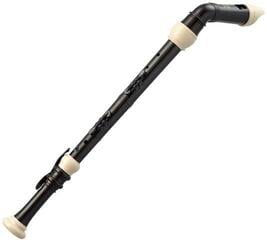
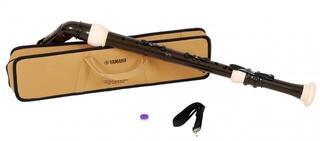
A bass recorder provides the lower voice of a consort and, because of its large body, uses keys, an angled mouthpiece or a blowpipe. You must manage a larger volume of air and support the instrument steadily. When choosing, consider your reach to the keys, your seated playing position and your ability to read the bass part.
A direct head joint and a blowpipe change the response
With a blowpipe, the instrument sits lower, but you feel less direct contact with the windway. An angled head joint may be more ergonomic. The joints must be airtight, and the pipe must not come loose while you play.
The keys need accurately seated pads
The lowest notes reveal a leak immediately. Try the mechanism slowly and in a faster passage, and listen for noise. Never lift the large body by a single key.
The bass fits into the whole family
You will find other registers among recorders. The soprano recorder uses a related technique but has a different register, resistance and size; it does not prepare you for all the ergonomic demands of the bass.
Try the bass recorder while seated with support, play through the lowest notes and check whether the keys can be serviced.